AI Vision Inspection · Operator Action Error-Proofing SOP

Right move or not, judged on the spot

Deterministic vision models score operator actions frame by frame, and the large model re-checks only when needed: wrong, missed, and anomalous moves are stopped at the station, every verdict carries traceable evidence, and images never leave the terminal.

Deterministic vision first · LLM as safety net · three-state, traceable verdicts

Per-frame verdictsOn-demand LLM re-checkThree-state resultsImages never uploadFull audit trail
Decision architecture

Vision decides, LLM double-checks

Speed and explanation are split across two engines: the deterministic vision layer owns recomputable verdicts inside the line takt, while the semantic layer handles occlusions and long-tail cases — both converge into one three-state result.

Deterministic vision layer

Per frame · Milliseconds

Owns accuracy and speed

Detection, keypoint pose, ROI and rule thresholds all close within a single frame; identical input always yields an identical result, fitting the line takt and enabling offline regression testing.

  • YOLO11 detection plus COCO 17-point pose
  • ROI, confidence thresholds, angle and displacement rules
  • WebGPU acceleration with WebNN / WASM fallback
  • Recomputable results, immune to model randomness

Semantic model layer

On demand · Explainable

Owns explanation and long-tail coverage

It steps in only when a step demands re-checking or the verdict is uncertain, confirms the frame semantically and returns a readable rationale; it stays off the high-frequency path and can be switched off entirely.

  • Semantic second opinion on occlusions and rare poses
  • Readable rationale for manual verification
  • Uncertain results fall back to humans, never forced through
  • Disabled means no weights loaded and full resource release

Who judges what

ScenarioJudgeWhy
Part presence, order, arrival posture Deterministic vision layer High-frequency and quantifiable — threshold rules judge it stably, frame by frame.
Occlusion, glare, rare postures Semantic model layer Long-tail cases are hard to enumerate; semantic reading returns a rationale humans can verify.
Neither layer can confirm Human confirmation Stop rather than slip through: uncertain never counts as a pass and escalates to the floor.
Recording and traceability Structured record Model version, mode, confidence and evidence time are logged per step and replayable per round.

Single inspection pipeline

  1. 01

    Local capture

    Station cameras stream into an in-browser Dedicated Worker for local inference — frames never leave the terminal.

    Local · Per frame
  2. 02

    Target locking

    Workpieces, tools and hands are detected; ROI and IoU tracking keep targets bound across frames.

    Detect + track
  3. 03

    Pose & timing

    Keypoint skeletons yield angles, movement direction and dwell time, checked against each SOP step.

    Pose + timing
  4. 04

    Semantic check

    When a step demands re-checking or the verdict is uncertain, the model confirms and explains.

    On demand
  5. 05

    Structured record

    Model version, mode, confidence and evidence time are written per step into the record.

    Full trace

One three-state verdict model

matched Pass

Judgement and time-window checks both hold, so the flow may advance.

Move to the next station step
not_matched Fail

Skipped steps, wrong order, timeout or off-spec posture are caught on the spot.

Alert on site and hold the flow
uncertain Uncertain

Insufficient evidence or timed-out checking is never counted as a pass — it stops rather than slips through.

Escalate to human confirmation

Decision guardrails

  • Late evidence is dropped per round; stale frames and poses never count
  • One frame cannot satisfy adjacent steps repeatedly, blocking click-through gaming
  • Release version, inspection mode and source generation are locked for the whole round
  • Hidden page, closed camera or lost session aborts the round; resuming never continues it
  • Only structured verdicts leave the terminal — raw images are neither stored nor shipped
Operator Action Error-Proofing SOP

Turn what must be done into visible evidence

The work instruction is broken into verifiable steps: who does it, how long it takes and what "done" looks like are checked against vision evidence. Wrong moves, skipped moves and anomalies are closed on the spot instead of surfacing at final inspection.

AI vision inspection line: an oblique view of multiple workstations running in parallel, each with a top-mounted vision camera verifying SOP steps
Current round Assembly line A-07 · Harness insertion station Hybrid mode · SOP v3.2 release Step 3 pending

Step-by-step SOP verification

Step Check Time limit Status System action
01 Part verification Harness colour code and bin label match the current work order ≤ 3s Pass Advance to the next station step
02 Housing insertion Hand enters the zone, movement aligns with the port axis and dwells for the required frames ≤ 6s Pass Record execution time and confidence
03 Torque fastening Wrist angle stays inside the standard band until the required frame count ≤ 8s Uncertain · occluded Confirmed by model re-check
04 Visual self-check Head turns to the observation point and gaze covers the port for the required frames ≤ 4s In progress Release once evidence qualifies
05 Scan and release Scan action completed and operator left the equipment safety zone ≤ 3s Not started Waiting for all prior steps

Errors, omissions and anomalies closed in one place

Wrong Wrong
Typical signs
Wrong part, wrong step order, reversed hand movement
How it is caught
Target class check plus step index and order constraints
Result
Held on the spot, redo from the correct step
Missed Missed
Typical signs
Unfastened screw, unplugged harness, skipped self-check
How it is caught
Missing-field detection plus adjacent-step progression constraints
Result
Part does not flow until completed
Anomaly Anomaly
Typical signs
Timeout, late execution, unauthorized person, failed capture due to occlusion
How it is caught
Step time limit plus subject identity plus frame freshness checks
Result
Round flagged and pushed to the line leader

From interception to improvement

  1. Intercept

    Deviations hold the flow immediately; defects never reach the next station.

  2. Guide

    Sound, light and on-screen cues point to the exact step to redo.

  3. Verify

    Semantic re-check or human confirmation completes the evidence; uncertain never passes.

  4. Record

    Round, step, mode and evidence time are logged in structured form.

  5. Improve

    False rejects and misses are aggregated per step to drive SOP and threshold tuning.

Stations are authorized by vision account and SOP release version. Changes take effect immediately, while historical rounds stay traceable under the release version of their time.

Use cases

From assembly to shipping, error-proofing everywhere

Any job that breaks into verifiable steps can plug into the same decision engine — scenarios differ only in SOP configuration and thresholds, not in development effort.

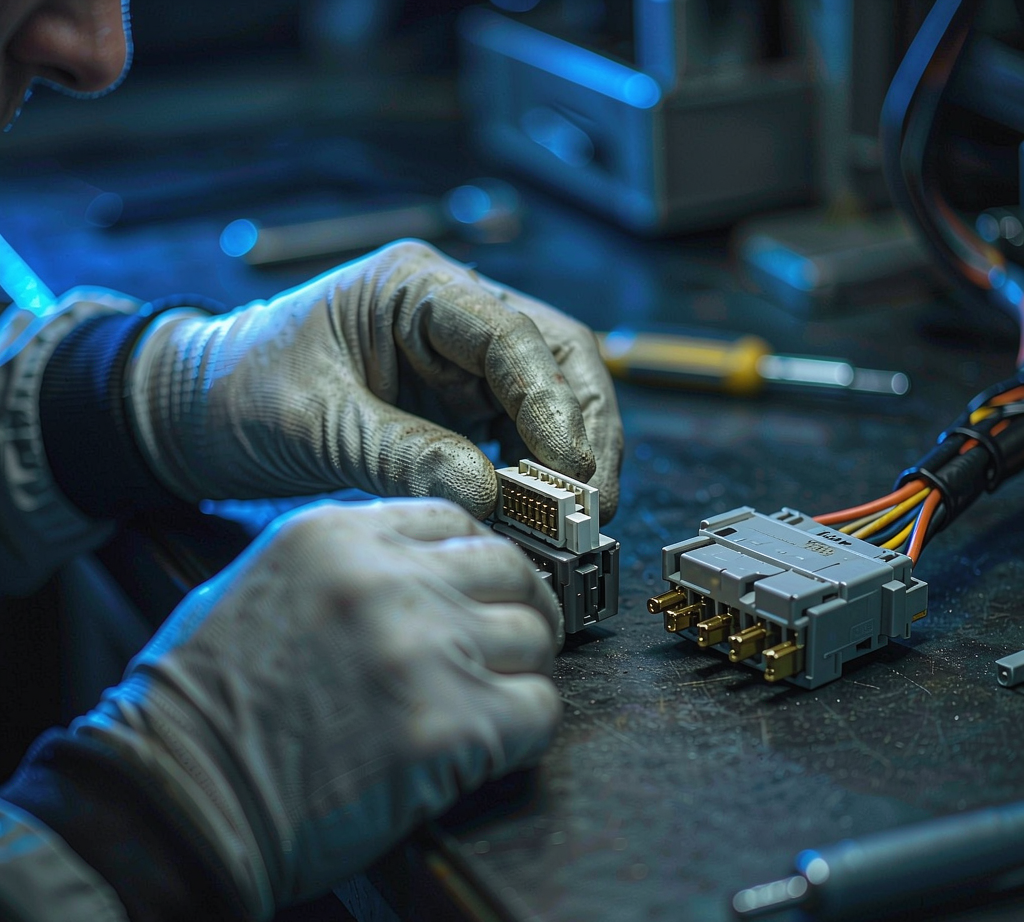
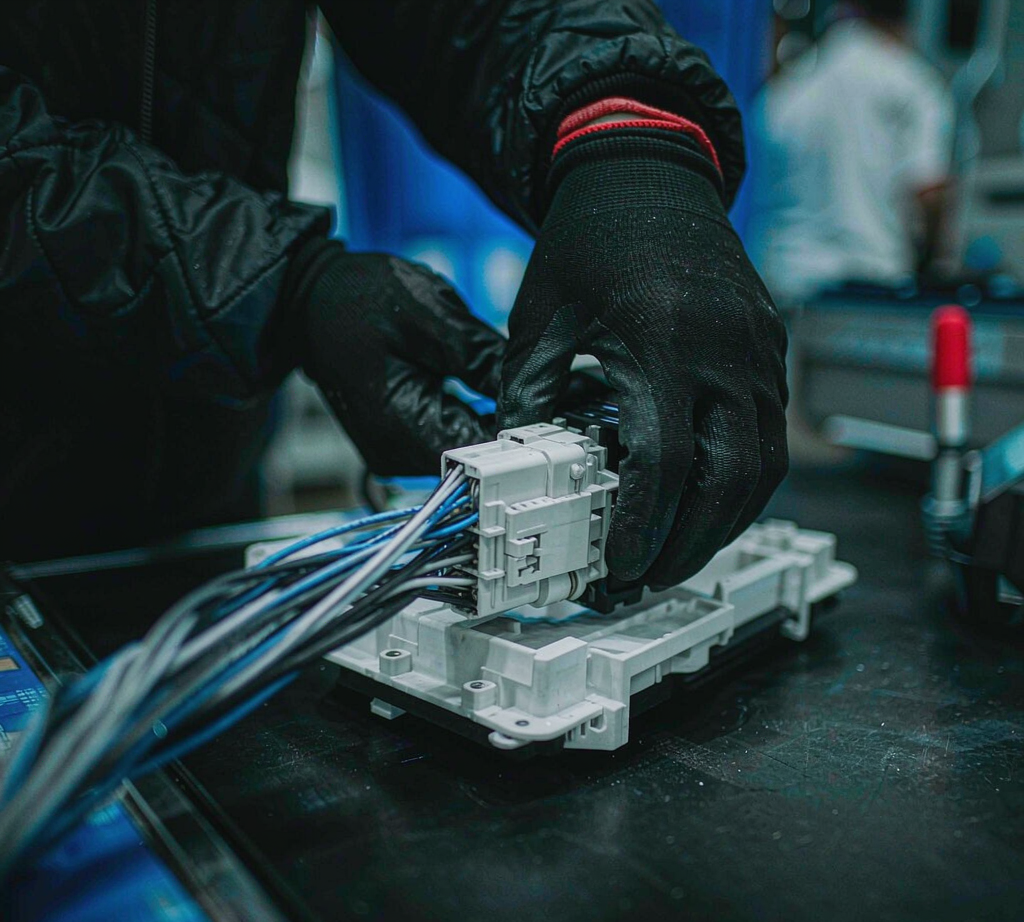
Gloved operator plugging a wire harness connector

Assembly error-proofing

Assembly

Action error-proofing for harness insertion, fastening and clip pressing.

  • Part model matches the work order
  • Insertion direction and dwell
  • Fastening gesture and duration
Operator putting on a hard hat and goggles before entering the floor

PPE compliance

Safety

Pre-entry protective equipment checks — no compliance, no entry.

  • Helmet and goggles present
  • Gloves consistent with hand tracking
  • No false violation after clock-out
Technician reading a gauge on plant piping during a round

Equipment inspection rounds

Inspection

Checklists become actions: what to look at, what to press, which gauge to read.

  • Point arrival and dwell time
  • Gaze over the gauge area
  • Missed items flagged immediately
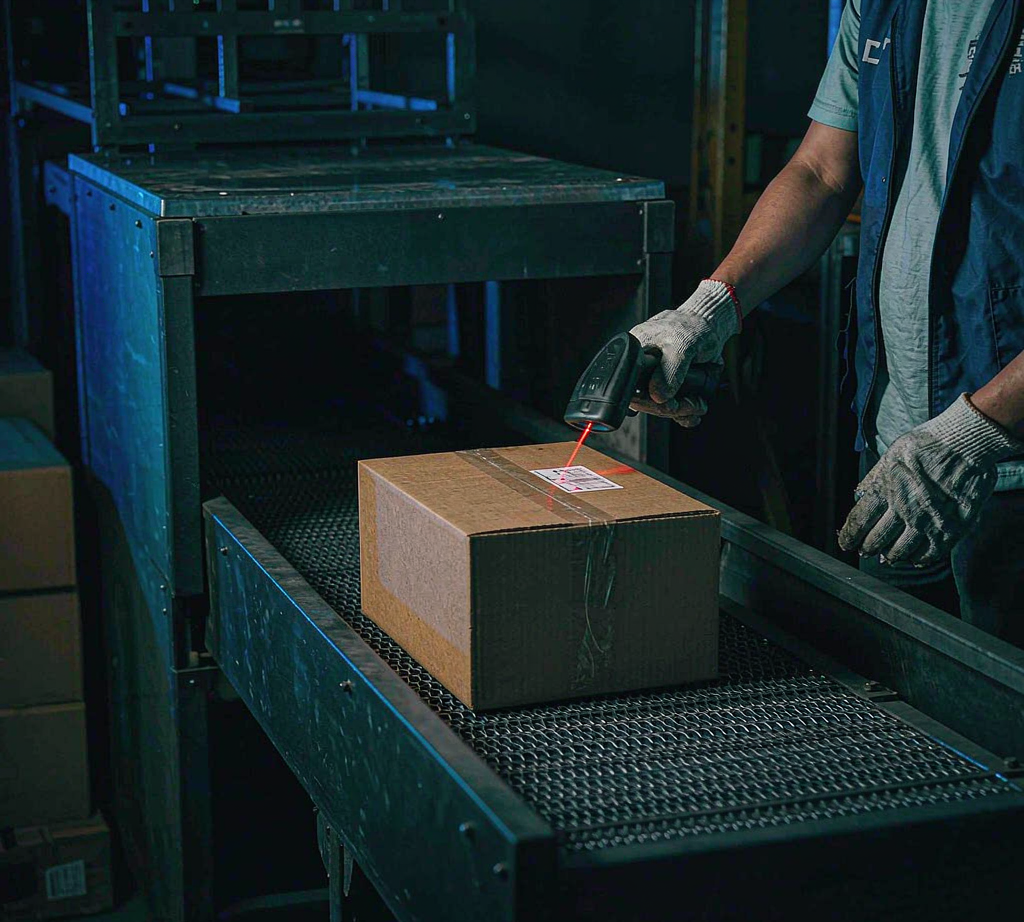
Warehouse operator scanning a shipping box label on a conveyor

Packing and shipping check

Shipping

Completeness re-check for packing, sealing, labelling and scanning.

  • Pack count and order
  • Label orientation and position
  • Scan release and safety-zone exit
Closed loop & governance

Tiered handling, traceable verdicts

Interception on the floor, confirmation by level, records built for replay: detection is not the end — turning deviations into a traceable, improvable loop is.

Three-tier escalation

L1

On-station handling

Sound, light and screen cues guide the operator to redo or complete the step; the round continues.

No approval needed
L2

Line-leader confirmation

Anomalous rounds or repeated uncertain results are pushed to the line leader for an on-site call.

Line leader confirms
L3

Quality-engineer improvement

Deviation trends are aggregated per step and fed back into SOP revisions and threshold tuning.

Weekly review

Deployment & integration

  • 01 Edge-first: detection and re-checking run in the terminal browser and edge nodes; inspection continues even offline
  • 02 Station authorization: standalone vision accounts bound to stations, isolated from system login identity
  • 03 Version locking: SOP and models run as immutable release versions; historical rounds trace to their version
  • 04 System linkage: verdicts can push into MES / BaseEdge task flows to trigger release, alerts or to-dos

Audit & compliance

Raw images stay on the terminal for inference only — never stored or uploaded. What leaves is structured verdicts and audit records; every verdict maps to model version, mode, confidence and evidence time, meeting compliance needs for sensitive scenes.

Ready to build your digital factory?

Book a demo with a dedicated consultant and get a One-MOM digital platform solution tailored to your industry.