Industry Solution · Machining

Every machine, every tool,inside its control band

For precision parts machining, One-MOM connects machine data, tool life, program versions and inspection results, bringing utilization, tool consumption and process capability into one control loop.

  • MDC connectivity
  • Tool lifecycle
  • Program version control
  • SPC capability

Connects Fanuc · Siemens · Mitsubishi · GSK CNC systems · on-premise deployment

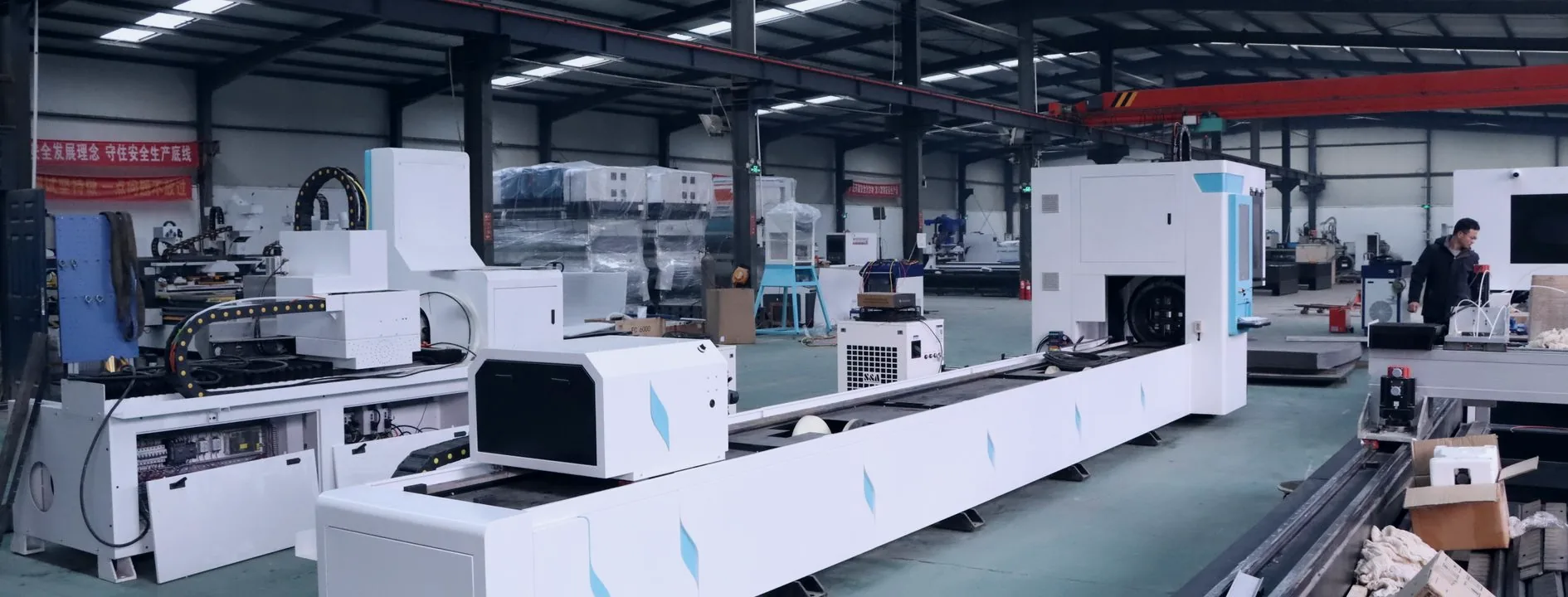
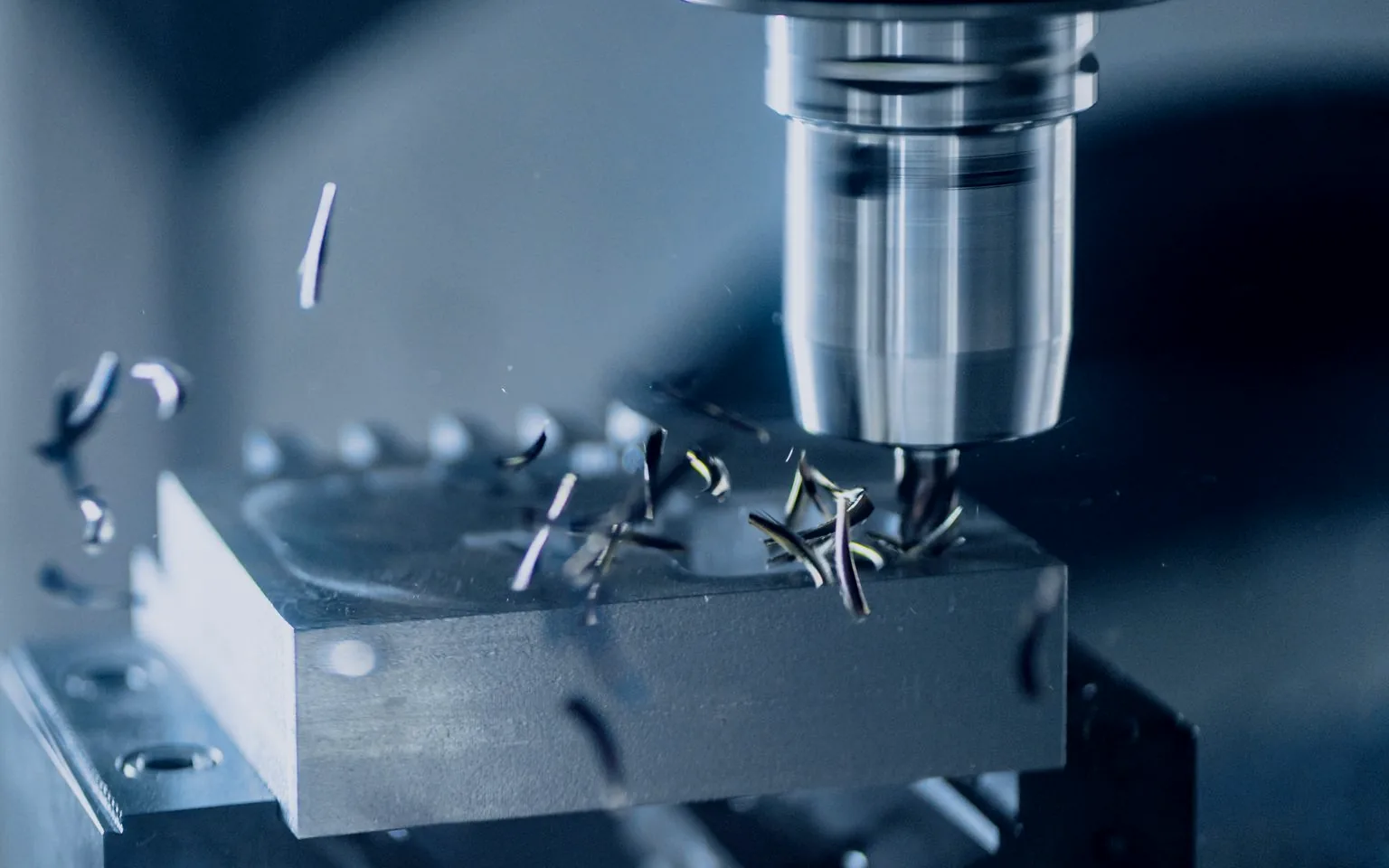
Modern CNC machining centre workshop with robotic loading
Machining Modern CNC machining centre workshop with robotic loading
  • 85.2% Overall equipment effectiveness +17pt
  • -23% Tool consumption cost Life-based change
  • 0 Wrong program version incidents Version fingerprint
  • -45% First article inspection time Direct gauging
Shop floor challenges

How machines really performis mostly estimated

Utilization is tallied by hand, tool life judged by feel, NC programs copied by USB stick. The real data of the machining floor stays inside the machine.

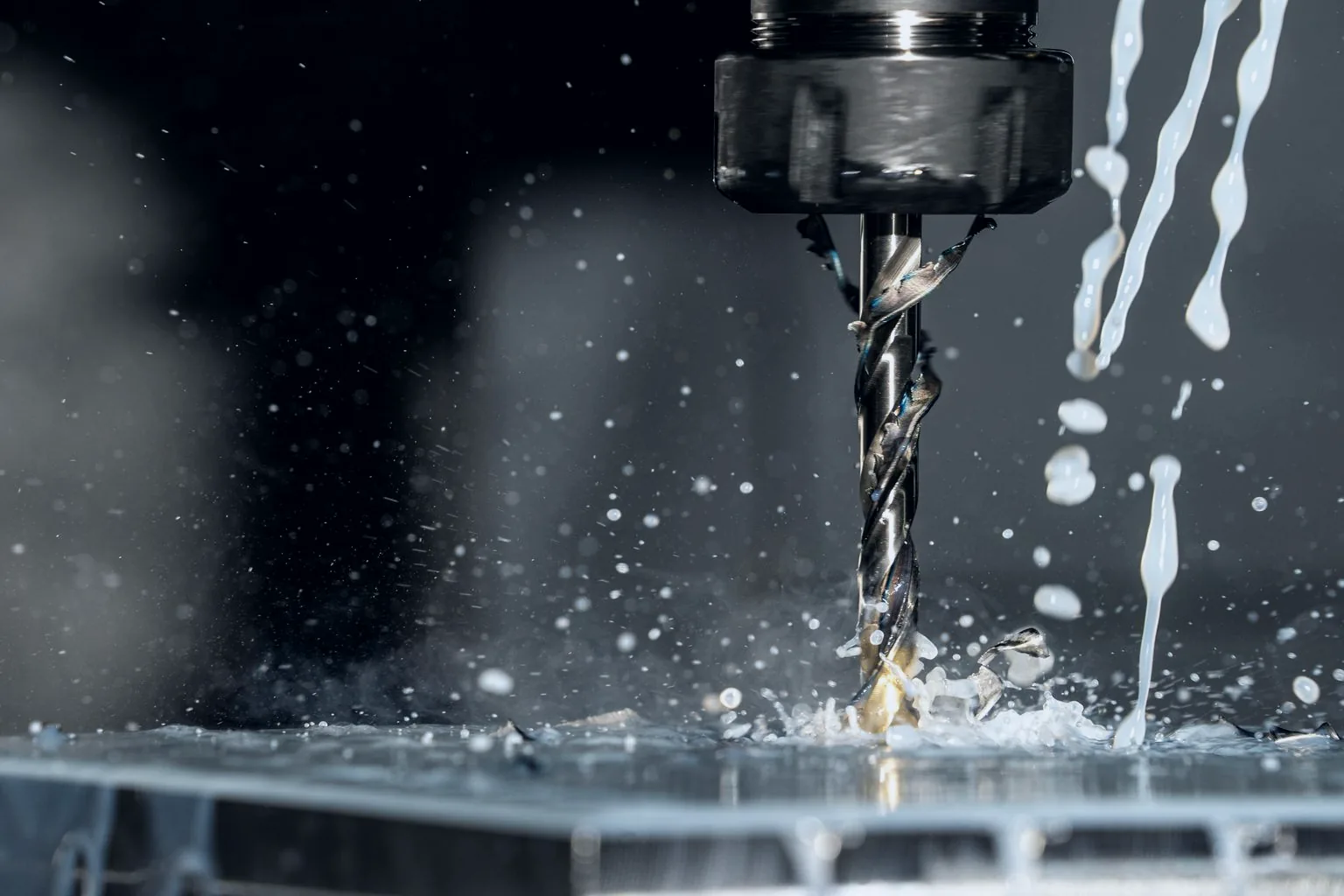
Worn and chipped end mill on a machine table
  • Machine status is a black box

    Run time is counted manually and stop reasons are filled in afterwards, so the numerator and denominator of OEE never match.

    Actual utilization 12pt below reported output
  • Tool life decided by feel

    Scheduled changes waste remaining life, overdue tools chip and damage workpieces, and breakage gives no advance warning.

    Chipping causes 34% of workpiece scrap
  • NC program versions out of control

    Programs are copied by USB and edited on the floor. Versions get mixed up and a wrong version scraps an entire batch.

    2.3 wrong-version incidents per year on average
  • Inspection data is offline and late

    First article and patrol checks live on paper. SPC cannot be computed live, so out-of-tolerance is found after a batch is done.

    No live monitoring of Cpk

Most machining problems are not about weak machines. They are about machine data that is never captured, judged and applied to the next part.

Control closed loop

From spindle load to Cpk,one continuous data chain

Once CNC systems, tool cabinets, presetters and gauges feed one platform, tool life, program version, process windows and quality judgement cross-check each other instead of living in separate silos.

  1. 01

    Sense Sense

    CNC systems and PLCs are connected directly. Spindle load, feed, speed, alarms and operating mode report live; tool RFID and presetter data are ingested together.

    • Direct connection for Fanuc, Siemens, Mitsubishi, GSK and others
    • Running, idle, alarm and stopped states identified automatically
    • Tool issue, presetting and regrinding data collected automatically
  2. 02

    Decide Decide

    Process windows and life models compare automatically: spindle load above threshold judges abnormal cutting, tool life decreases on both part count and cutting time, and SPC rules trigger on their own.

    • Cutting parameters outside the process window judged abnormal
    • Dual-basis tool life counting with predictable remaining life
    • Built-in control chart rules flag out-of-tolerance immediately
  3. 03

    Act Act

    End-of-life tools force a change and lock program calls. Version mismatch blocks start. Exceptions escalate by tier to maintenance, process and supervisors.

    • Forced tool change at end of life prevents overrun
    • Program fingerprint mismatch blocks machine start
    • Exception orders tracked to closure with timeout escalation
  4. 04

    Trace Trace

    Every part is bound to machine, tool, program version, cutting parameters and inspection records. An abnormal batch locates all affected parts in one click.

    • Full chain: part, tool, machine, program, inspection
    • Scrap and rework attributed by machine, tool and shift
    • Complete machining history exportable for customer audits

Why machine connectivity must be done once, properly

Collecting data without judging it turns machine connectivity into a dashboard. One-MOM mounts process windows and life models directly on the collection layer, so captured data changes machine behaviour in the next second.

Core capabilities

Utilization, tooling, versionscontrolled in one pass

Machining cost and risk concentrate in equipment efficiency, tool consumption and program control. One-MOM provides a measurable control method for each.

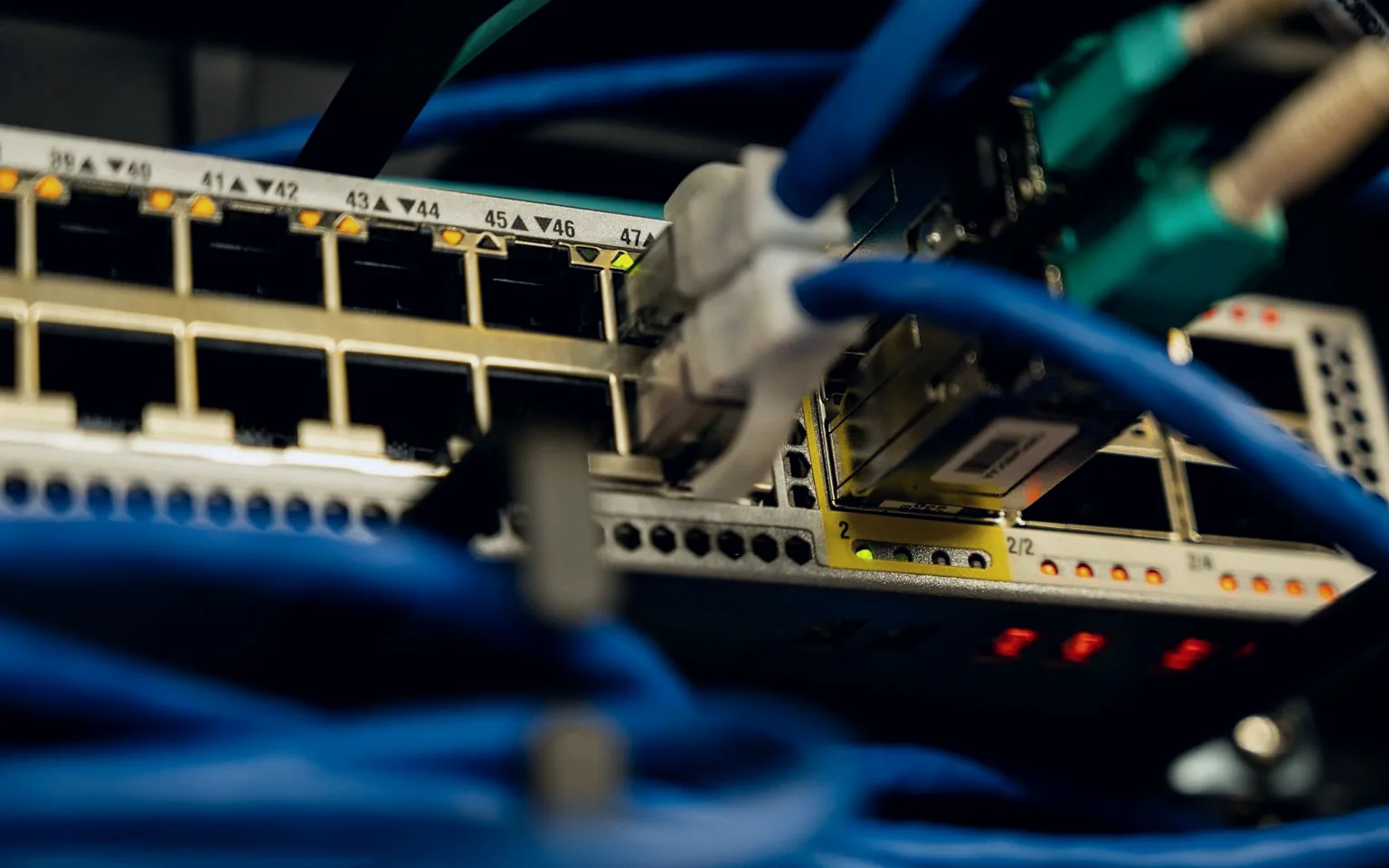
Ethernet cables linked into a network switch with active LEDs for machine data collection MDC

Machine connectivity and OEE attribution

CNC systems and PLCs are connected directly to capture running, idle, alarm and stopped states. Stop reasons are classified automatically with Pareto analysis.

  • OEE decomposed into availability, performance and quality
  • Stop reasons auto-classified, so improvement has a handle
  • Machine state linked live to work orders and operations
Smart tool cabinet with RFID tags and a tool presetter TCM

Full lifecycle tool management

Tools are tracked from receiving, issue, presetting and cutting through regrinding and scrap. Life decreases on both part count and cutting time.

  • End-of-life warning and forced change prevent chipping
  • Breakage detection linked to spindle load spikes
  • Tool cost accounted per part, machine and operation
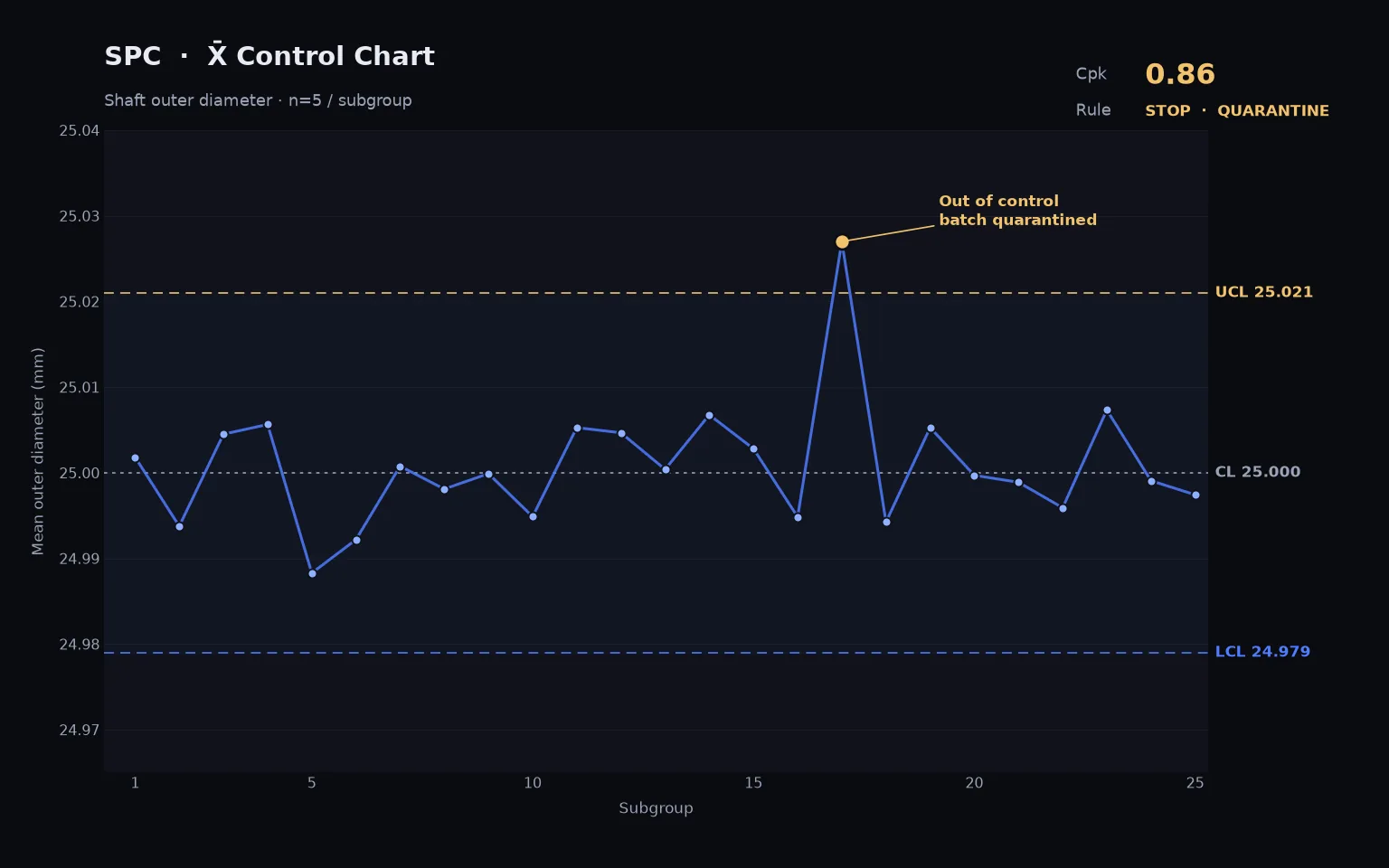
SPC X-bar control chart with a point beyond the upper control limit DNC + SPC

Program version and process quality control

NC programs are released from a controlled library and may only start after version verification. First article, patrol and final inspection data are captured online with live Cpk.

  • Program version fingerprint check, wrong version blocks start
  • CMM and gauge data captured directly, no manual entry
  • Out-of-tolerance inspection triggers stop and batch quarantine
Station control points

Put control points in the machine,not in the rulebook

Process engineers configure control points, triggers and actions, and the machine executes them directly instead of relying on discipline.

Machining cell operator checking a part with a digital caliper and tablet
Station Control point Trigger System action
CNC turning Tool life Remaining life below the next part cycle Warn the section leader early, force change at end of life
Machining centre Program version Program fingerprint differs from the released version Block start and lock the machine
Machining centre Cutting anomaly Spindle load continuously above threshold Reduce speed or stop, notify the process engineer
First article inspection First article not judged First article not measured or not passed Block batch start
Patrol inspection Process capability Three consecutive points near a control limit Push a process adjustment suggestion and flag the batch
Tool magazine Tool kitting Tools for the next work order not ready Generate a tool preparation task 2 hours ahead

All control points are adjustable on the low-code platform. New parts or process changes need no modification of the collection program.

Operations cockpit

Which machine is down,and why

Machine status, tool life and quality indicators are linked on one screen, so supervisors can dispatch actions straight from the board.

Measured results

Only visible datacan actually be improved

Typical before and after indicators for machining projects. Actual results vary with connectivity coverage and process maturity.

+17pt

Overall equipment effectiveness

Auto-classified stop reasons give improvement a handle

-23%

Tool consumption cost

Life-based change replaces scheduled change

0

Wrong program version incidents

Version fingerprint check blocks wrong-version start

-45%

First article inspection time

Direct gauge capture and auto judgement replace manual entry

Indicators are typical customer statistics six months after go-live and depend on a site assessment.

Connect first, then improve

Book a machine connectivity assessment. We will deliver the connectable machine list, a collection point plan and an OEE improvement path.