Industry Solution · Assembly

Every torque on a mixed line,fully evidenced

For automotive parts and final assembly, One-MOM combines station level error proofing, material replenishment and end to end traceability in one closed loop, so mixed-model lines no longer depend on veteran intuition.

  • Mixed-model lines
  • JIT / JIS supply
  • Torque proofing
  • Bidirectional traceability

Connects torque guns · electric drivers · ANDON · vision · PLC · on-premise deployment

Mixed-model final assembly shop floor with digital andon boards
Assembly Mixed-model final assembly shop floor with digital andon boards
  • 99.2% First pass yield +2.4pt
  • -86% Wrong or missing part PPM Hard interlock
  • 98.6% On-time kitting Pull replenishment
  • <10s Vehicle traceability query Both directions
Shop floor challenges

The more variants,the less experience suffices

One station handles an ever growing number of configurations. Part recognition and paper work instructions let wrong or missing parts slip to the next station, or to the customer.

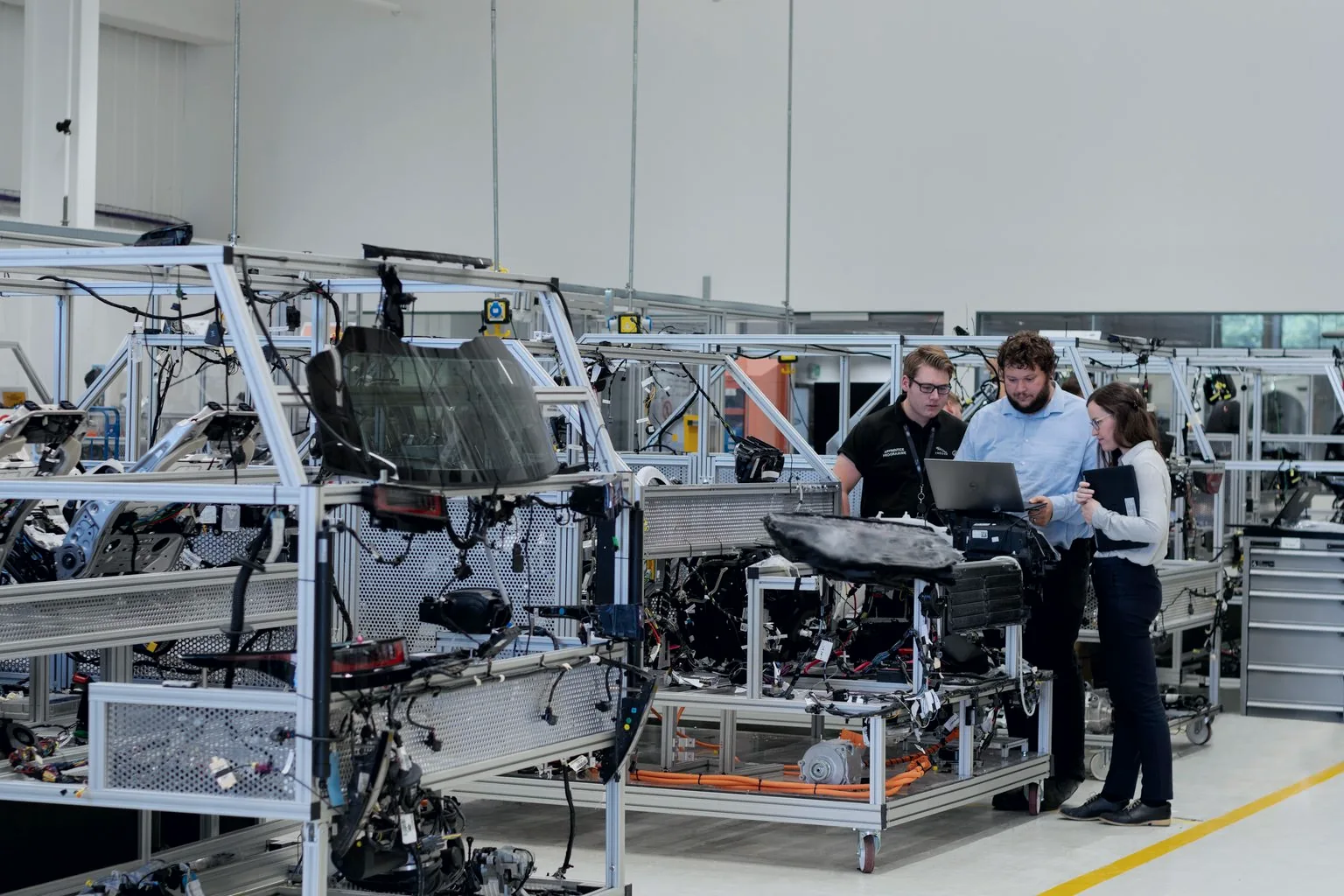
Engineers checking parts on multi-model vehicle assembly rigs in an automotive plant
  • Wrong and missing parts on mixed lines

    Many similar parts share one station with wide configuration differences. Manual part number recognition cannot interlock errors at the station.

    Rework and line stop account for 60%+ of quality loss
  • Torque data trapped in controllers

    Tightening data stays local to the controller and is never bound to the vehicle VIN, so audits rely on manual record hunting.

    Critical characteristic data completeness below 70%
  • Kitting driven by chasing and guesswork

    Line side shortages coexist with excess stock. Delivery takt and line takt are disconnected and kitting status is invisible.

    Line side inventory turnover 5.8 days
  • Slow exception response, no attribution

    Andon calls happen by voice, supervisor response is unrecorded, and downtime lacks owner attribution and closure tracking.

    Average exception response 14 minutes

These problems share one root cause: the station lacks real-time judgement, hard interlock and automatic record keeping.

Control closed loop

Four stages at the station:Sense · Decide · Act · Trace

From device signal capture to traceability reporting, One-MOM closes the loop on one platform. Data is never re-handled, and judgement results act directly on station release.

  1. 01

    Sense Sense

    Torque guns, electric drivers, vision, RFID, ANDON and PLC signals are unified; station level data is reported within 200 ms.

    • Direct connection to major tightening controllers and PLC protocols, no manual transcription
    • Station scanning, operator qualification and fixture status captured together
    • Line side racks and AGV delivery status visible in real time
  2. 02

    Decide Decide

    Vehicle configuration auto-matches routing and configured BOM; torque, angle, turn count and kitting status are judged against rules in real time.

    • Configured BOM compared automatically with scanned physical parts
    • Torque out of tolerance, missed, repeated or out-of-sequence tightening all judged
    • Kitting risk warned 30 minutes before a line stop
  3. 03

    Act Act

    Nonconforming units are not released and do not flow forward. ANDON escalates by tier to supervisors, process and maintenance; picking is guided by light instead of memory.

    • Hard interlock: operations cannot be reported while NG
    • Escalation on timeout with full response audit trail
    • Sequenced SPS supply synchronized with station takt
  4. 04

    Trace Trace

    VIN or serial number is the thread joining man, machine, material, method and environment; a bidirectional traceability report is generated in one minute.

    • From vehicle back to part batch, from part forward to vehicle scope
    • Critical characteristics retained in full for OEM audits
    • Recall scope located in seconds and exported in one click

Why the loop must live on one platform

Splitting sensing from judgement, or execution from traceability, is the classic cause of broken data chains in assembly. One-MOM runs all four stages on one data model, so rule changes reach the station immediately without re-integrating each system.

Core capabilities

Three things done right,wrong parts approach zero

Assembly quality risk concentrates in tightening, kitting and traceability. One-MOM delivers deployable station level capability for each.

Digital torque gun fastening at an assembly station Hard interlock

Station level proofing and torque control

Process parameters feed torque guns and drivers directly. Torque, angle and turn count are judged live; out-of-tolerance locks the station and raises a rework order automatically.

  • Full tightening curves retained and bound to the VIN
  • Multiple tightening strategies dispatched per vehicle variant
  • Missed, repeated and out-of-sequence tightening all blocked
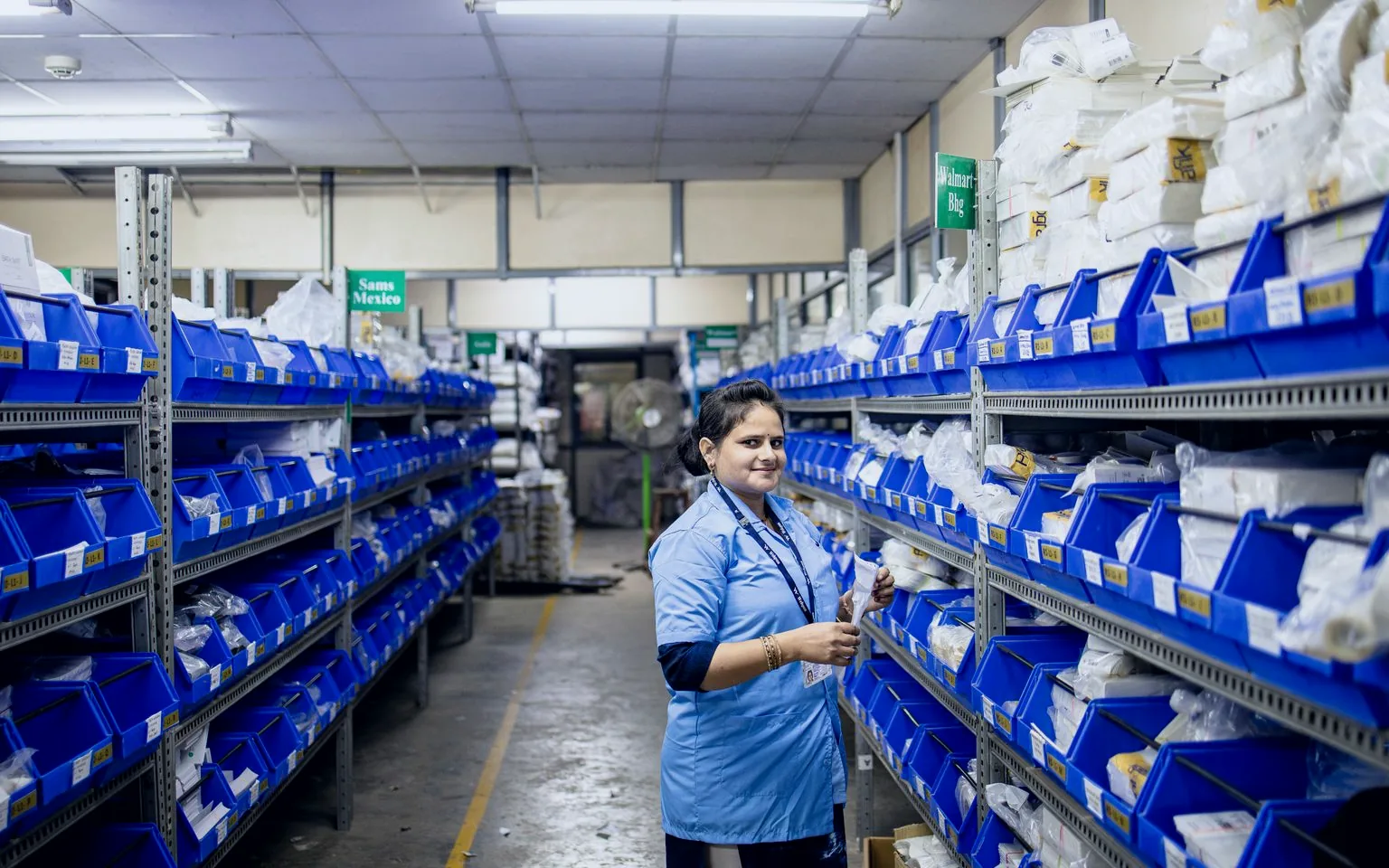
Smart parts supermarket with pick-to-light system JIT / JIS

Kitting pull and pick-to-light

Line takt drives material pull. Picking tasks are generated per configuration and guided by light instead of memory, with shortage risk warned in advance.

  • Line side stock quotas and reorder points calculated automatically
  • Sequenced SPS supply synchronized with the station
  • Supplier delivery takt linked to the production plan
Operator scanning a parts barcode with a handheld scanner and tablet One item one code

Vehicle level bidirectional traceability

Serial number is the thread joining material batches, operators, equipment parameters and inspection records, in both directions.

  • Critical parts bound one item one code at the moment of assembly
  • Recall scope located in seconds and exported in one click
  • Traceability reports generated on demand for OEM audits
Station control points

Every station getsan explicit control point and action

Control points, trigger conditions and system actions are configuration, so shift and variant changes no longer depend on verbal handover.

Digital assembly station with instruction touchscreen and light-guided rack
Station Control point Trigger System action
Interior station Wrong configuration part Scanned variant does not match the physical part number Lock station and push correct part number with image
Chassis tightening Torque out of tolerance Torque or angle outside the tolerance band Alarm at station, raise rework order and quarantine
Fluid filling Fill volume deviation Fill deviation above 2% Suspend filling and notify the process engineer
End of line test Missed inspection item Inspection items incomplete or not passed Block certificate print, vehicle cannot be stored
SPS kitting area Kitting risk Kitting rate below current takt demand Warn 30 minutes ahead and chase replenishment
Rework station Rework closure Defect not closed or re-inspection failed Vehicle cannot proceed to the next stage

Process engineers configure every control point on the low-code platform; new variants or tolerance changes need no custom development.

Operations cockpit

See the whole shop flooron one screen

Line status, critical characteristic judgements and exception events are linked on one screen, so supervisors stop switching between systems.

Measured results

From interlock to closure,quality cost falls with it

Typical before and after indicators for assembly projects. Actual results vary with line maturity and deployment scope.

99.2%

First pass yield

Full judgement of critical characteristics raises end of line pass rate

-86%

Wrong / missing part PPM

Hard interlock replaces manual recognition, errors do not escape

3 min

Exception response time

Tiered ANDON with timeout escalation, previously 14 minutes

2.1 days

Line side inventory turnover

Pull replenishment replaces guesswork, previously 5.8 days

Indicators are typical customer statistics six months after go-live and depend on a site assessment.

Let data make the call on your assembly floor

Book an on-site diagnostic for your line. We will deliver a deployable station control point list and a migration path.